
“To migrate is to walk through fear with nothing but faith and the belief that tomorrow can be better.”
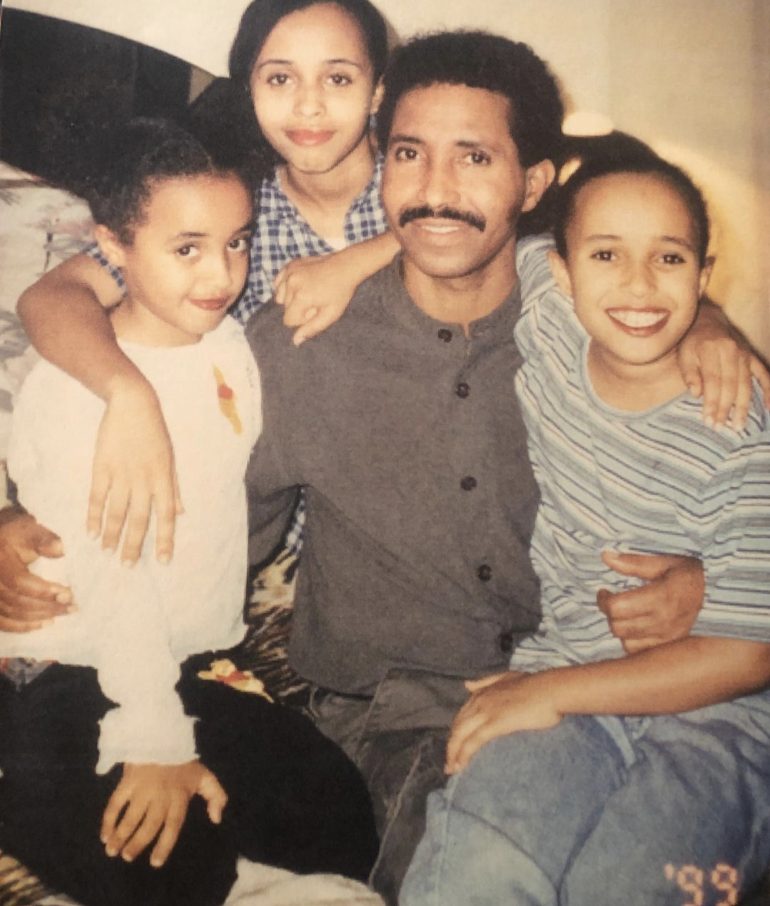
Story #55, Abebe Gebrezgi
Story written and interview conducted by Gabriella Bruke Alem
Edited by Kiyoung Haavisto
Abebe Gebrezgi, 62 years old, is an Ethiopian immigrant who fled the civil war in Ethiopia, finding a haven in Sudan before eventually settling in the United States. The journey, filled with struggles, shaped him into the person he is today. He recounts a path marked by hardship, including the violence of Ethiopia’s Red Terror.
This movement was a brutal campaign of political repression and violence orchestrated by the Derg military from 1976 to 1978, resulting in the deaths of tens of thousands of people. Gebrezgi recalls the horrors of this time, stating that if you were against the communists or if you didn't follow them, they killed you on the spot or came door to door.
Years of displacement and uncertainty taught him resilience and an appreciation for the smallest moments of stability. His time in Sudan exposed him to diverse communities of refugees, each carrying their own stories of loss and hope. As he walked through the camp, he saw countless faces, each carrying their own story and each holding tightly onto the hope of a better future.
One man he spoke with shared the painful journey that had brought him from Yemen, a journey marked by the loss of his wife. When he talked about his three children, “his voice softened with love and longing,” Gebrezgi said. Every sacrifice he made, he said, was for them - to provide a life safer and brighter than the one he had known.
Gebrezgi met people from all walks of life, each with their own struggles and dreams. Their stories not only broadened his understanding of the world, but they also deepened his empathy and fueled an unwavering determination to rebuild his own life.
Despite initial struggles, he emphasized the opportunities and freedoms in the U.S., noting his children's educational achievements. Gebrezgi has 5 children, and they all work in respectable fields like law and medicine.
He described America as a land of opportunity, saying education and work are accessible, and that “to be an entrepreneur or to take advantage of your creativity, the door is wide open.” His experiences continue to shape how he views the world through endurance, humility, and an unwavering belief in opportunity and peace.
Reflecting on the possibility of migrating again, “Yes, if it meant surviving, I would do it again,” Gebrezgi said. “Instead of staying and killing each other, we escaped to the nearest country that could keep us safe at that time. The journey out of my homeland was rough, but we made it. With a lot of prayer and with God’s help, we eventually reached the United States. So yes, I have no regrets.”
America is often known as the land where one can dream and have the resources to accomplish them, a place where many arrive with the hope of building a future their home countries, worn by war or government instability, could not offer. For parents like Gebrezgi, the dream is simple: to work hard, to provide, and to give their children the education and possibilities they themselves never had. He often spoke of the values they tried to instill, principles like “If you work hard enough, nothing is impossible.” At the end of the day, the greatest achievement for them is seeing their children succeed.
On a final note, he chose to share a moment that encapsulates his journey. “When I arrived in New York City, everything felt unreal: the green trees, the flowers, the clean streets. For years, I kept asking my friend, ‘Pinch me… am I awake or dreaming? Is this heaven?’ Coming from a desert, it truly looked like heaven to me.” Gebrezgi said, “After everything, I learned that hope and faith are stronger than any hardship.”
