
Ukraine
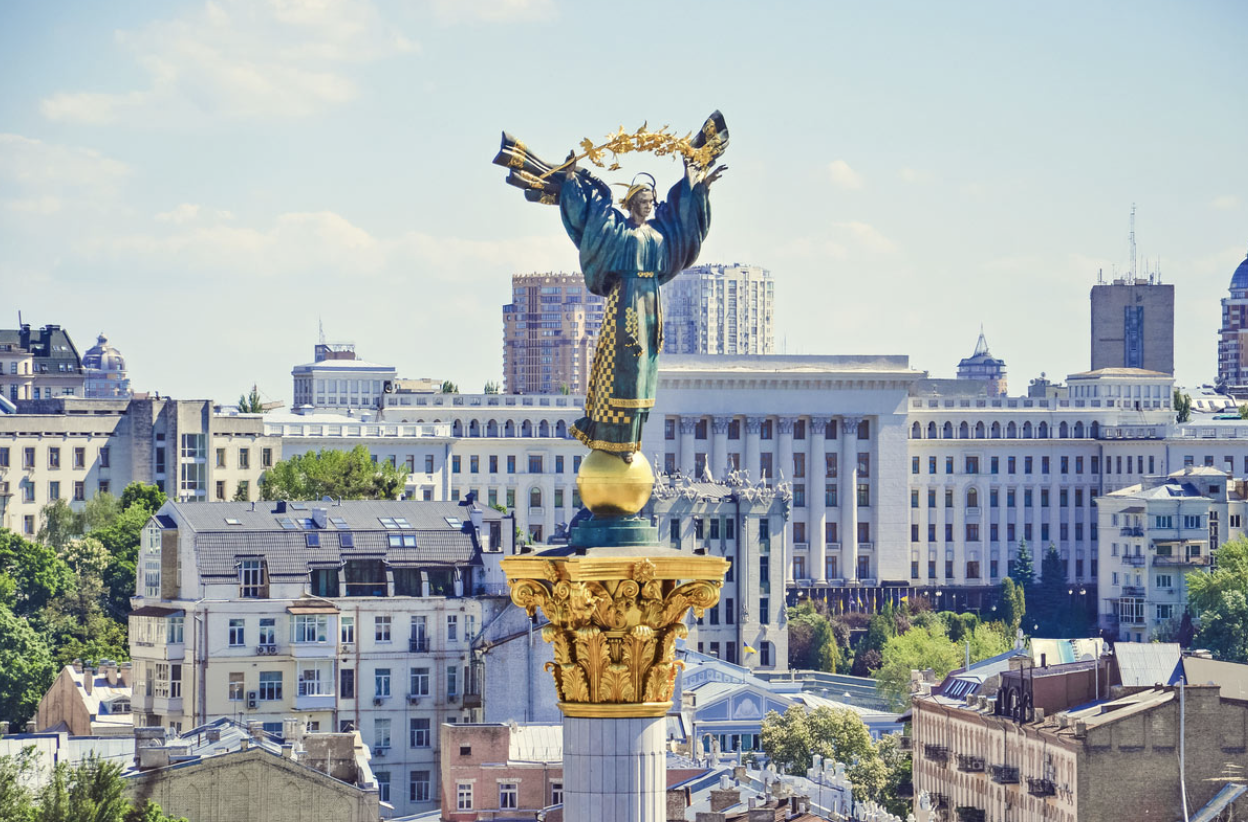
Monument of Independence, Kyiv
Full Name: Ukraine
Date of Independence: August 24th, 1991
Capital: Kyiv
Population: 37.86 million people
Foreign-Born Population: 5 million people (11% of the population)
Government Structure: Unitary Semi-Presidential Republic
Leader(s): President Volodymyr Zelenskyy
Primary Flow of Immigration: Ukraine has a net emigration rate of -3.15 migrants per 1,000 population (est. 2024), reflecting the large-scale outflow of people since the start of the war.
Ukraine is historically both a sending and receiving country for migrants. In recent decades, Ukraine has received immigrants primarily from other former post-Soviet countries like Russia, Belarus, Azerbaijan, Georgia, and Uzbekistan, as well as asylum seekers from Afghanistan and Syria. However, since the 2022 Russian invasion, Ukraine has experienced massive external emigration and internal displacement rather than immigration.
Major Destinations of Emigrants:
The biggest destinations for emigrants include nearby countries to the West: Poland, Romania, Germany, Czech Republic, Spain, as well as the United States.
Poland hosts the largest Ukrainian diaspora in Europe, with more than 1.5 million Ukrainian refugees registered.
Within the U.S., Ukrainian communities are concentrated in Illinois, New York, California, and Pennsylvania.
Primary “Push” Factors:
War and Insecurity: The ongoing Russian invasion (since February 2022) has displaced over 6 million Ukrainians externally and more than 5 million internally.
Economic Instability: High unemployment, inflation, and destruction of infrastructure due to war have intensified migration pressures.
Corruption and Political Uncertainty: Despite reform efforts, corruption and political challenges continue to shape migration dynamics.
Demographic Decline: Low birth rates and emigration have contributed to a shrinking workforce.
